
RICE HUSK BRIQUETTE MACHINE
Converting rice husks into high-density, high-quality, dense biomass briquette fuel, solves environmental problems while creating additional value.
RICE HUSK BRIQUETTE MACHINE FOR SALE
Professional Rice Husk Briquetting Press for High-Density Biofuel briquettes, a good choice transfer waste to value.
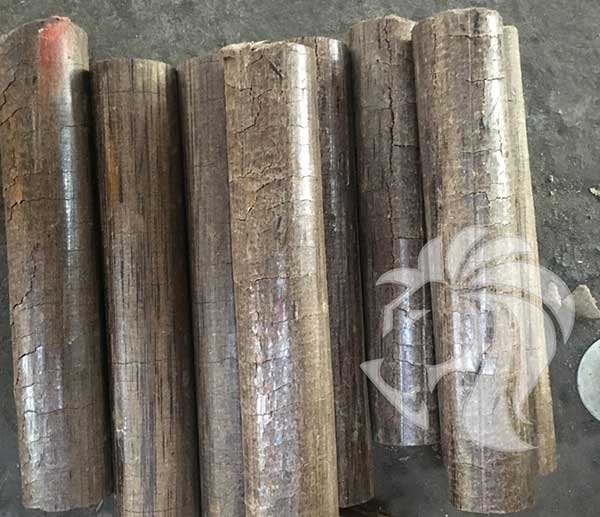
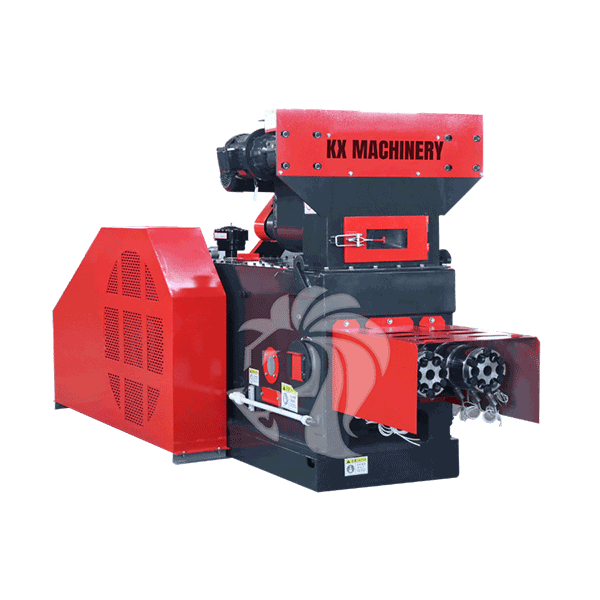
Rice Husk Briquette Machine is a machine that can compress rice husks into solid, cylindrical-shaped biomass briquettes. It does not need to use a binder. The mechanical piston briquette machine applies high pressure to the rice husk, causing the natural lignin to release and work, and act as a glue, binding the rice husk together. This process transforms low-density waste (typically 0.1-0.2 g/cm³) into high-density fuel briquettes (up to 1.4 g/cm³), making rice husk briquettes easier to store, transport, and burn for a longer time.
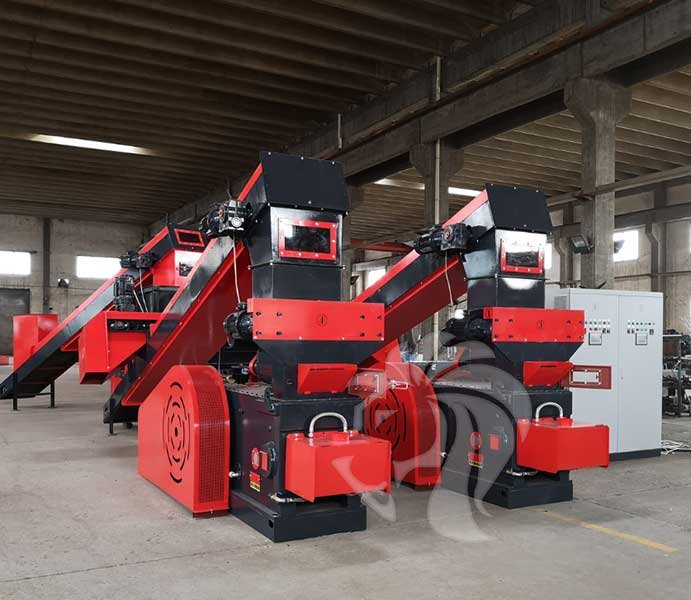
RICE HUSK BRIQUETTING MACHINE TYPES
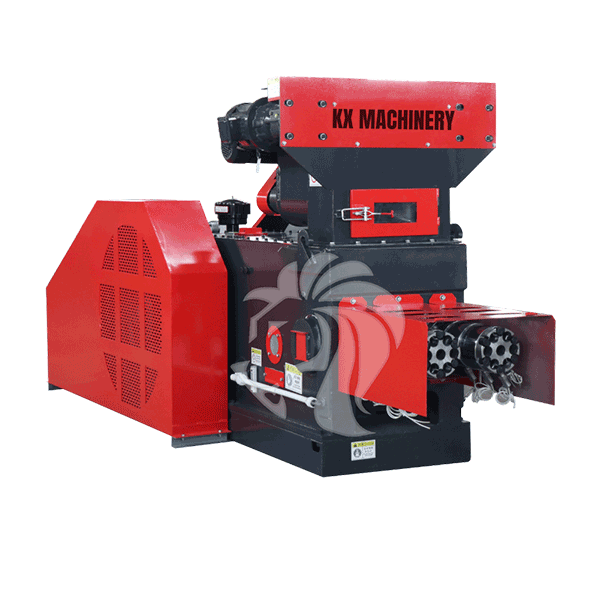
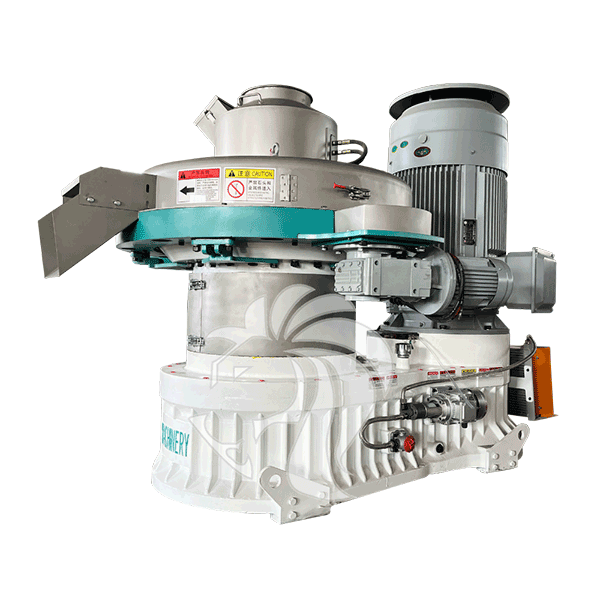
Piston-type rice husk briquette machines and ring-die rice husk briquette machines are the two main types of briquette presses used to produce rice husk briquettes. Their design principles and advantages differ significantly. Below is a detailed analysis.
The Piston-Type Rice Husk Briquette Press operates using a high-speed reciprocating motion of a ram. This design applies huge pressure to press rice husks into high-density fuel briquettes.
Key Features:
- High Pressure: The mechanical piston creates a very high compression force, resulting in extremely dense and durable briquettes.
- Low Energy Consumption: It is highly energy-efficient, consuming only approximately 30 kWh per ton of finished product.
- Simple Maintenance: KX briquette machine is robust and heavyduty, making it very easy to maintain.
- Lowest Operating Cost: Due to the energy efficiency and simple mechanics, it is recognized as the lowest actual operating cost briquetting machine available on the market today.
The Ring-Die Rice Husk Briquette Machine utilizes a rotating press roller that forces rice husks through the holes of a rotating ring die. This extrusion process forms the material into dense cylindrical briquettes.
Key Features:
Small Diameter Briquette: Due to the die design, the diameter of the briquettes is typically limited to a maximum of 30 mm.
High Production Capacity: The primary advantage is its high single-unit outputs.
Higher Energy Consumption: The extrusion process requires more power. The energy consumption is generally higher, averaging between 60 and 70 kWh per ton of briquettes.
Is Rice Husk Briquette Profitable?
For many newcomers entering the biomass industry, the most critical question is: Is rice husk briquette business profitable?
Based on current market data and operational feedback, rice husk briquetting is a good business with good profit . However, profitability can vary depending on local conditions in your country.
Why Does Rice Husk Briquetting Offer Good Profit Margins?
- Low Raw Material Cost
Rice husk is an agricultural by-product. In many rice-producing regions, it is considered waste. Many of our clients can acquire rice husks at very low costs, and in some cases, even for free. This extremely low input cost creates a solid foundation for profit.
- Minimal Pre-Processing Required
Unlike other biomass materials (like wood or straw), rice husks typically have a naturally low moisture content and a suitable size. This means that you can feed them directly into the briquette machine, no need for costly grinding and drying machines. This significantly lowers your overall production cost.
- Simplified Briquette Production Line Maximizes the Profit
A standard rice husk briquetting plant is extremely straightforward. A rice husk briquetting plant only includes one feeder conveyor and one briquette machine. This simple design means lower equipment investment, less floor space, lower maintenance, and labor cost saving, all contributing to maximized profit margins.
Want to Explore the Potential in Your Market?
Profitability depends on your local rice husk availability, energy costs, and selling price for biomass fuel. If you would like to discuss your specific situation or calculate potential returns for your region, contact us now.
RICE HUSK BRIQUETTE VS RICE HUSK PELLET, WHICH ONE IS BETTER?
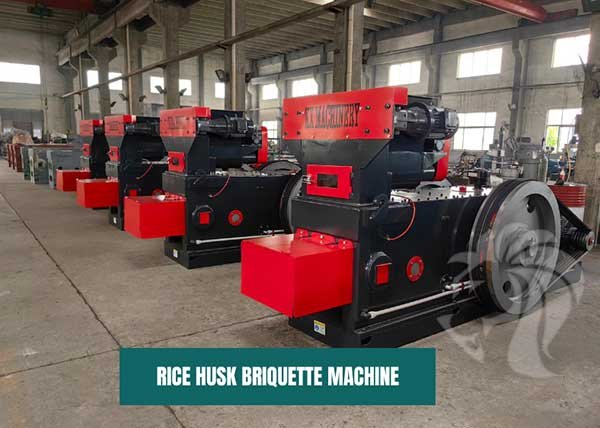
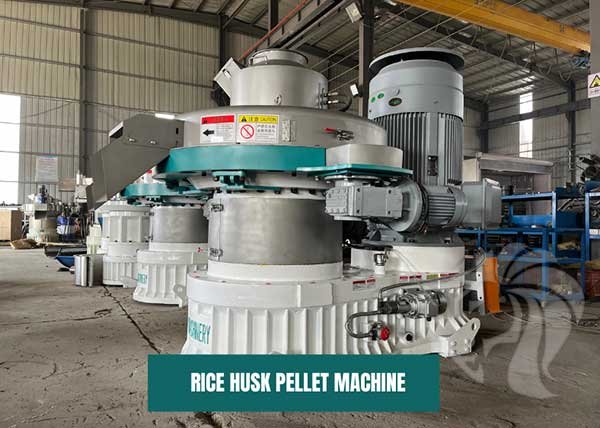
For rice husks, a special raw material with a high silicon content, a stamping-type rice husk briquette making machine is generally a better choice for the following reasons:
- From a technical perspective: The high silicon content of rice husks causes greater wear on the a pellet mill ring die. While the stamping method uses a “piling” principle, wear is still present, but much less than on the pellet mill die.
- From a return on investment perspective: Producing one ton of briquettes requires less electricity, no drying is needed, and maintenance parts are cheaper, resulting in a significantly lower overall cost compared to pellets. Although the selling price of briquettes is usually slightly lower than pellets, the net profit is often higher due to the much lower cost.
While pellets production cost higher, if your customer base consists of European households using heating systems or users requiring automated gasification furnaces who only accept small pellets (6-8mm), then a rice husk pellet mill is the only option.
If you are new to the industry and your target market is industrial boilers or power plants, a stamping-type rice husk briquetter is a faster and more worry-free solution for achieving profitability.
TECHNICAL PARAMETERS
| MACHINE MODEL | MOTOR | CAPACITY | MACHINE WEIGHT |
|---|---|---|---|
| KX-LM500 | 22KW | 300-500KG/H | 3,200KGS |
| KX-LM1000 | 45KW | 600-1,000KG/H | 6,000KGS |
| KX-LM2000A | 55KW | 1,000-1,500KG/H | 9,000KGS |
| KX-LM2000B | 75KW | 1,300-2,000KG/H | 10,000KGS |
HOW TO MAKE RICE HUSK BRIQUETTES?
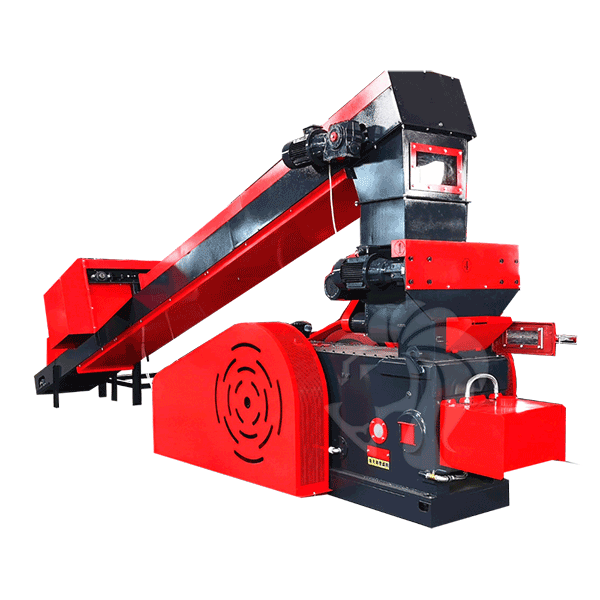
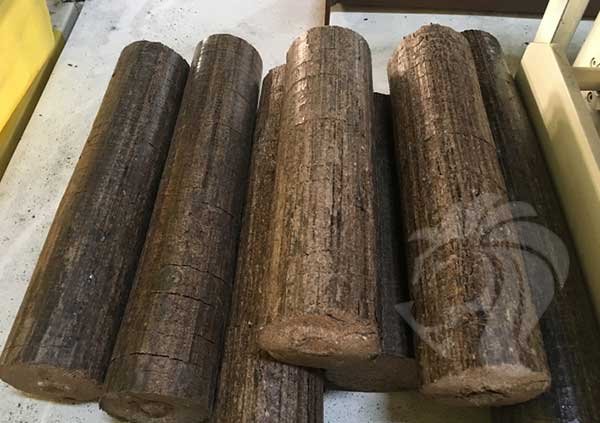
Transforming rice husks into high-density fuel briquettes is a straightforward process with the right equipment. Here is a simple guide on how to make rice husk briquettes:
Step 1: Material Feeding
Collect the raw rice husks and load them into an automatic feeder. The automatic feeder then transfers the material evenly via a belt conveyor into the briquette machine. This automated feeding system ensures a consistent and efficient production flow.
Step 2: High-Pressure Briquetting
Inside the briquette machine, a high-speed reciprocating ram (piston) forcefully pushes the rice husks into a compression mold. Under extreme pressure and the resulting high temperature, the natural lignin in the husks is activated, binding the material together. This process forms the loose husks into solid, high-density fuel briquettes ready for storage or combustion.
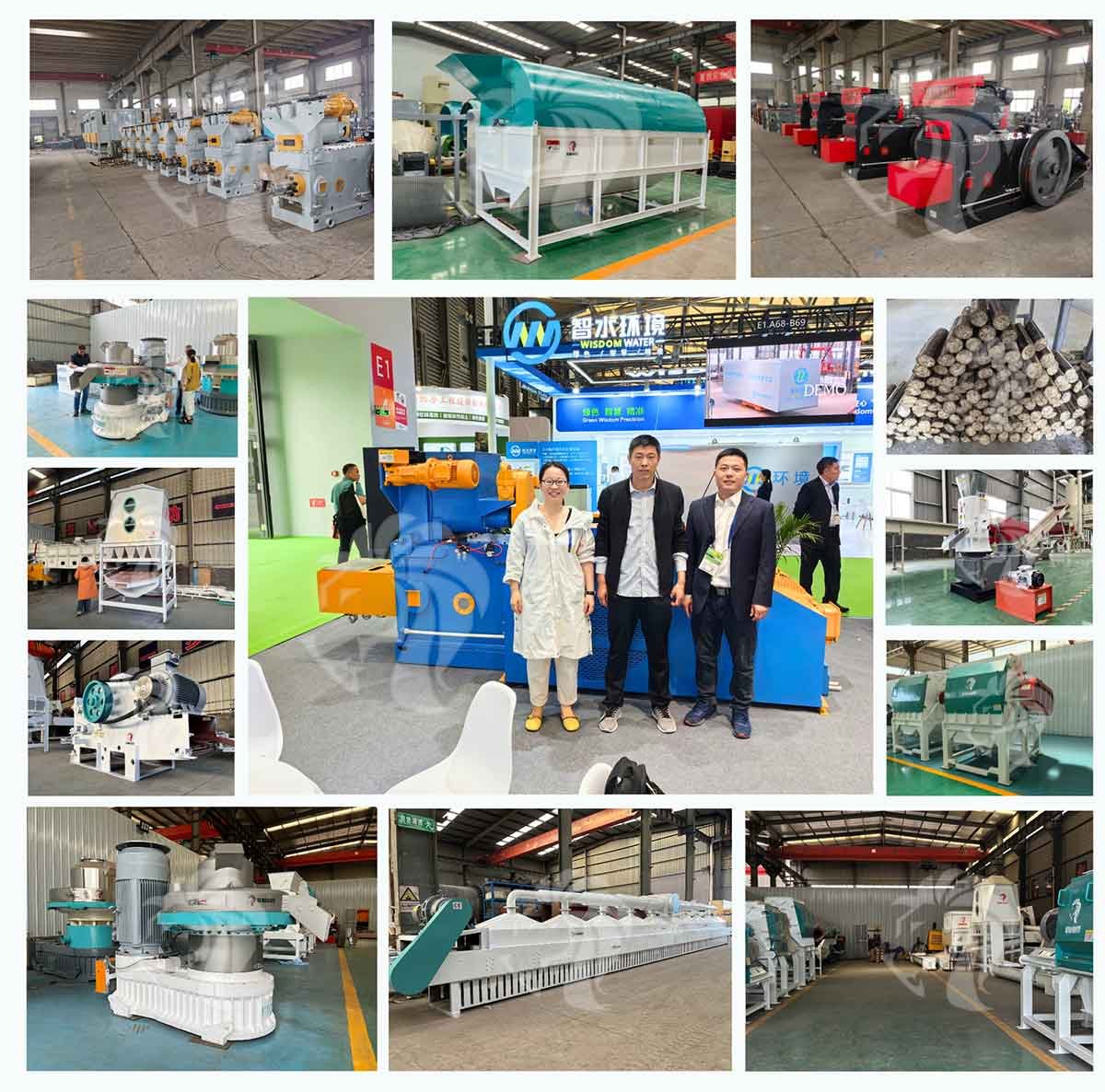
RICE HUSK BRIQUETTE MACHINE MANUFACTURER YOU CAN TRUST
FREQUENTLY ASKED QUESTIONS
What is a rice husk briquetting machine?
Rice husk briquetting machine is a press machine that presses rice husks into solid and high-density fuel biomass briquettes, no need to use binder when briquetting, it can transfer agricultural waste into fuel briquettes and make extra profit, usually the rice husk briquetteshave a calorific value at around 3600-3900 Kcal/kg, but it’s ash content is higher than the wood pellets. It’s a good fuel energy source for industrial boilers, power plants, and heating applications.
How does the rice husk briquetting press work?
First, you need to feed the rice husk into the briquette press using an automatic feeder or screw conveyor. Inside the briquette making chamber, a high-speed reciprocating ram (piston) forcefully pushes the rice husk into a tapered forming die mould, the rice husk under pressures reaching up to 700 tons and temperatures of 90-150°C. This high pressure activates the natural lignin in the rice husks, releasing and working, and binds the rice husk together. When the briquettes cool, forming a solid and dense rice husk briquettes.
What is the difference between a briquette machine and a pellet mill for rice husk?
The main differences between the rice husk pellet and briquette are in size and application. Briquettes’ size is larger, typically 30-90mm in diameter, and the length is usually random, while pellets are small, the diameter is usually 6-12mm, and the length is cut to 3-5cm. Briquettes are ideal for industrial boilers and manually fed stoves. Pellets suitable foran automatically fed pellet burner or biomass boilers. For rice husk specifically, briquette machines often handle the material better due to its high silica content, which causes rapid wear in ring die pellet mills.
How much does a rice husk briquette machine cost?
The rice husk briquette machine price varies based on capacity and automation level. A small-scale rice husk briquetting machine typically requires an investment between $30,000 and $40,000 USD, including the briquette press, feeding conveyors, PLC control panel, etc.
What is the ROI of a rice husk briquetting plant?
Return on investment depends on local conditions, but usually a briquetting machine can achieve a payback period of less than 1-1.5 years.
What are the uses of rice husk briquettes?
Rice husk briquettes have followed applications:
· Industrial biomass fuel for the boilers or burner: Replacement for coal, natural gas, or diesel for industrial boilers, power plants, or cement factories
· Heating: As a good fuel for greenhouses, hotels, factories, and farms
· Home cooking: Clean-burning fuel for home stoves or burners
· Charcoal briquettes production: Can be carbonized into BBQ charcoal for the restaurants
What is the cost of a rice husk briquette machine?
The small piston-type rice husk briquette machine price is around 30,000USD. For accurate price, please contact us directly. We offer different capacity briquette machine from 0.3 to 10 tons/hour and can provide a customized briquette press, expect further discussion with you.
Other Machines You May Need


CONTACT US NOW
We are one of the most professional mechanical piston briquette machine manufacturers from China. You are welcome to contact us to discuss more details.
- The best design & quality machines
- Quick reply within 2 hours
- Provide the best proposal within 72 hours.
- Free test run service for special raw materials
- Detailed case analysis, make you knowbriquette machines soonest.